
Challenging Discriminatory Recovery Litigation | RHA
Challenging Discriminatory Policies Through Litigation: The Strategic Path for Recovery Housing in 2026
For years, recovery housing providers have operated under a cloud of uncertainty. From "spacing requirements" that treat sober living homes like hazardous waste sites to zoning boards that refuse to recognize the "family-like" nature of these households, the barriers to entry are often high and intentionally obstructive.
But there is a significant shift happening. In 2026, the industry is moving past the era of simply "asking for permission." Recovery advocates are increasingly turning to strategic litigation—using the courts not just to win individual cases, but to set precedents that dismantle systemic barriers for the entire industry.
1. Litigation as a Shield and a Sword
When a city denies a permit or a landlord refuses to lease to a recovery organization, it isn’t just a business hurdle; it is a potential violation of the Fair Housing Act (FHA) and the Americans with Disabilities Act (ADA). Strategic legal action serves two critical, high-impact purposes:
The Shield: Immediate Defense
The "shield" is used to protect an existing home from being shut down by discriminatory "nuisance" laws, selective code enforcement, or sudden zoning changes. This often involves filing for a Preliminary Injunction, which stops a city from enforcing a closure order while the broader legal merits of the case are argued.
The Sword: Systemic Reform
The "sword" is about offense. Instead of just fighting for one house, advocates are challenging a city's entire zoning code. The goal is to strike down ordinances—such as mandatory 1,000-foot buffers between sober homes—that do not apply to "traditional" families. By winning these cases, providers ensure that any future recovery home in that jurisdiction can open without facing the same illegal hurdles.

2. The 2026 "Intentionality" Shift: A New Legal Burden
The legal landscape changed dramatically in early 2026. On January 14, 2026, the Department of Housing and Urban Development (HUD) proposed a sweeping rule change to rescind its formal Disparate Impact regulations (91 FR 1475).
What This Means for Providers
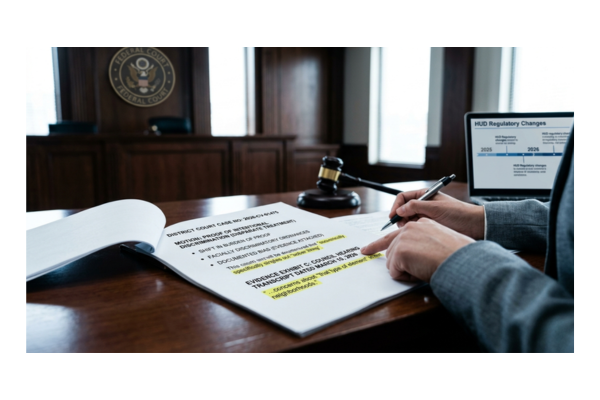
Historically, you could win a case by proving a policy had a discriminatory effect, even if you couldn't prove the city intended to discriminate. With the 2026 pivot away from these broad regulations, the burden of proof is shifting toward Intentional Discrimination (Disparate Treatment).
The Challenge: It is no longer enough to show that a "spacing requirement" disproportionately hurts people in recovery.
The Opportunity: Plaintiffs must now highlight "facially discriminatory" policies—where the law specifically singles out "sober living" or "disabled persons" for different treatment than a traditional family unit.
Advocacy Insight: This makes the "paper trail" more important than ever. Documenting biased comments made by city council members during public hearings or saving emails where a landlord expresses "concerns about the neighborhood" is now the cornerstone of a successful lawsuit.
3. Case Study: United States v. Town of Beekman (March 2026)
One of the most significant cases currently unfolding is United States v. Town of Beekman. Filed by the U.S. Attorney’s Office for the Southern District of New York, the complaint alleges a "pattern or practice" of disability discrimination.
The Conflict
The town blocked the Bunkhouse Recovery Ranch, a home intended for veterans and first responders, by misclassifying it as an "alternate care facility" or "nursing home." This classification triggered $50,000 in site-plan fees and engineering reports that a standard family home would never face.
Why It Matters
This case is a landmark because it reinforces three key principles in the 2026 legal climate:
Residential Status: Recovery homes are residential uses of property, not clinical or commercial ones.
Federal Oversight: Despite the shift in HUD regulations, the Department of Justice (DOJ) is still actively using the FHA to hammer municipalities that use procedural delays as a weapon.
Reasonable Accommodation: The Town of Beekman ignored requests for reasonable accommodation for nearly a year—a delay that courts are increasingly viewing as a "constructive denial" of civil rights.

4. Why Strategic Litigation is a Worthwhile Investment
Many providers hesitate to sue because of the cost and the fear of "making enemies" in the city. However, the benefits of a successful legal challenge often outweigh the risks:
Creating "By-Right" Status
The ultimate goal of litigation is to achieve "By-Right" development. This is a state where a recovery home is treated exactly like a single-family residence, requiring no special permits, public notoriety, or "permission" from neighbors who may hold stigmatized views.
Recovering Costs and Damages
The FHA is a "fee-shifting" statute. This means that if a provider prevails, the court can order the city to pay the provider’s attorney’s fees and monetary damages. In 2026, this has made litigation a viable path even for smaller nonprofits and grassroots organizations.
The "Ripple Effect" of Precedent
A win in one district often forces surrounding cities to update their zoning codes proactively. Municipalities are risk-averse; when they see a neighboring town lose a $250,000 settlement over a sober living home, they are much more likely to quietly remove their own discriminatory "spacing" requirements.

5. Actionable Strategy: Building Your Case
To succeed in the current legal environment, recovery providers must be proactive in their documentation. If you are facing opposition, follow these steps to prepare for potential strategic litigation:
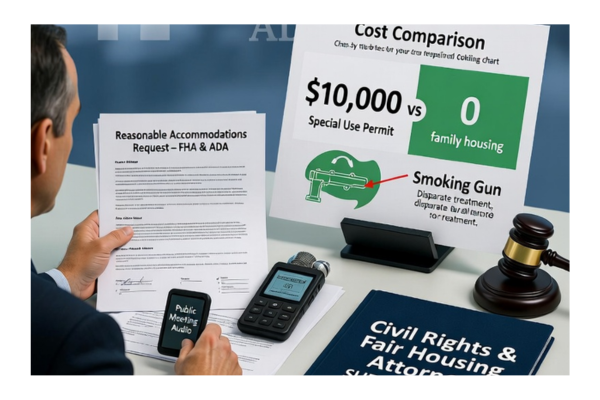
Request in Writing: Always submit requests for "Reasonable Accommodations" in writing, citing the FHA and ADA.
Record Public Meetings: If a zoning board is debating your permit, record the audio. In Beekman, biased public testimony was a key part of the DOJ’s evidence.
Track Comparative Costs: If the city requires a $10,000 "Special Use" permit, document that a family moving into the same house would pay $0. This is the "smoking gun" for disparate treatment.
Consult Specialists: Do not use a general real estate lawyer. You need a civil rights or Fair Housing attorney who understands the specific protections afforded to individuals with Substance Use Disorder (SUD).
The Path to Lasting Protection
Discriminatory policies don't just "go away" on their own. They are removed when brave providers and advocates stand up and say, "The law is on our side."
By leveraging the Fair Housing Act through strategic litigation, we aren't just opening one house—we are clearing the path for the thousands of individuals still waiting for a safe, supportive place to call home. In 2026, the message to municipalities is clear: the era of illegal obstruction is over, and the era of accountability has begun.
Frequently Asked Questions
What is considered discriminatory litigation in recovery housing? This refers to legal actions taken to prevent recovery homes from opening or operating based on biases against people in recovery.
How can providers fight back against discrimination? Providers can use the Fair Housing Act and other federal protections to challenge local zoning or legal barriers.
What role does the Fair Housing Act play? The Act protects individuals with disabilities (including those in recovery) from housing discrimination.
Is legal advocacy necessary for recovery homes? Yes, having legal support helps ensure that recovery residences are treated fairly and can maintain their operations without illegal interference.
To learn more about your rights under the Fair Housing Act, explore our Fair Housing & Advocacy resource center.