Legal Resources for Recovery Housing Advocacy
Access background materials and legal resources related to recovery housing, fair housing law, and civil rights protections.
Understanding Recovery Housing Law
Recovery housing plays a vital role in helping individuals rebuild their lives after substance use disorder. For attorneys entering this area, understanding the unique legal landscape is essential for effective advocacy and supporting recovery residences.
Regulatory Challenges
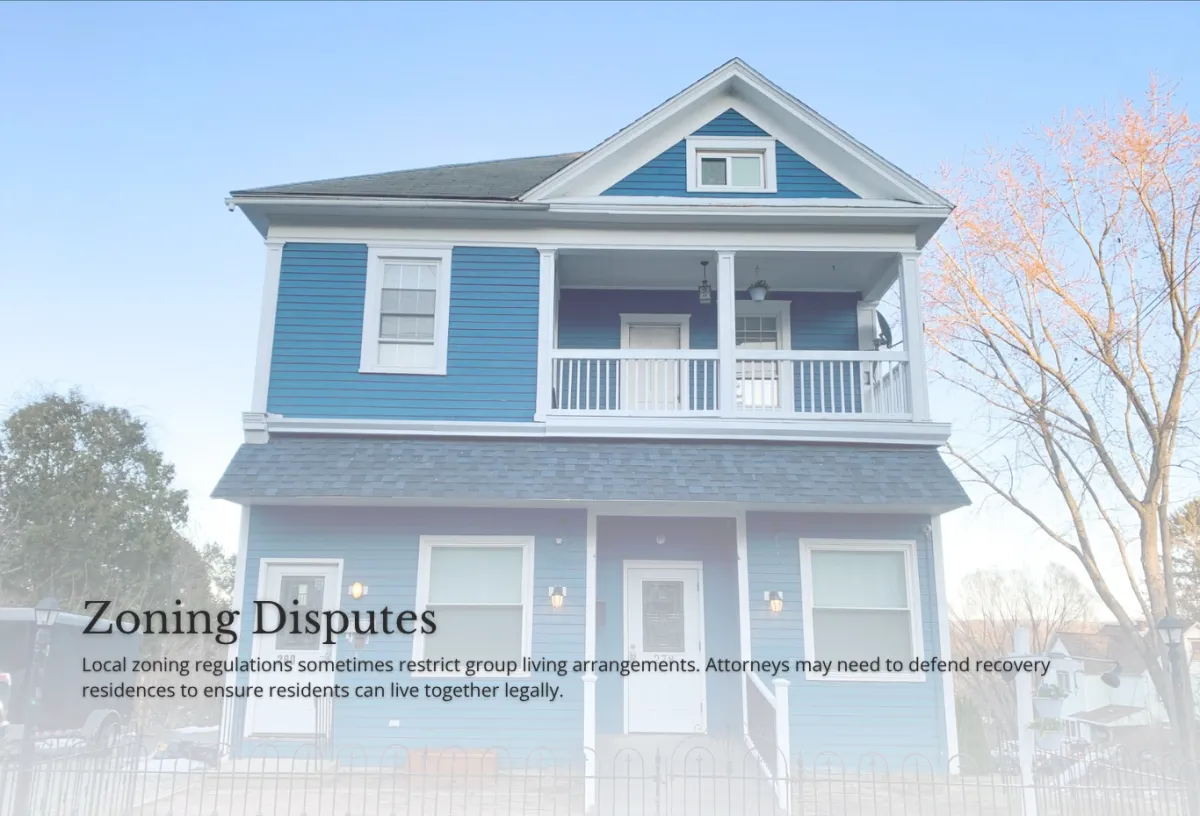
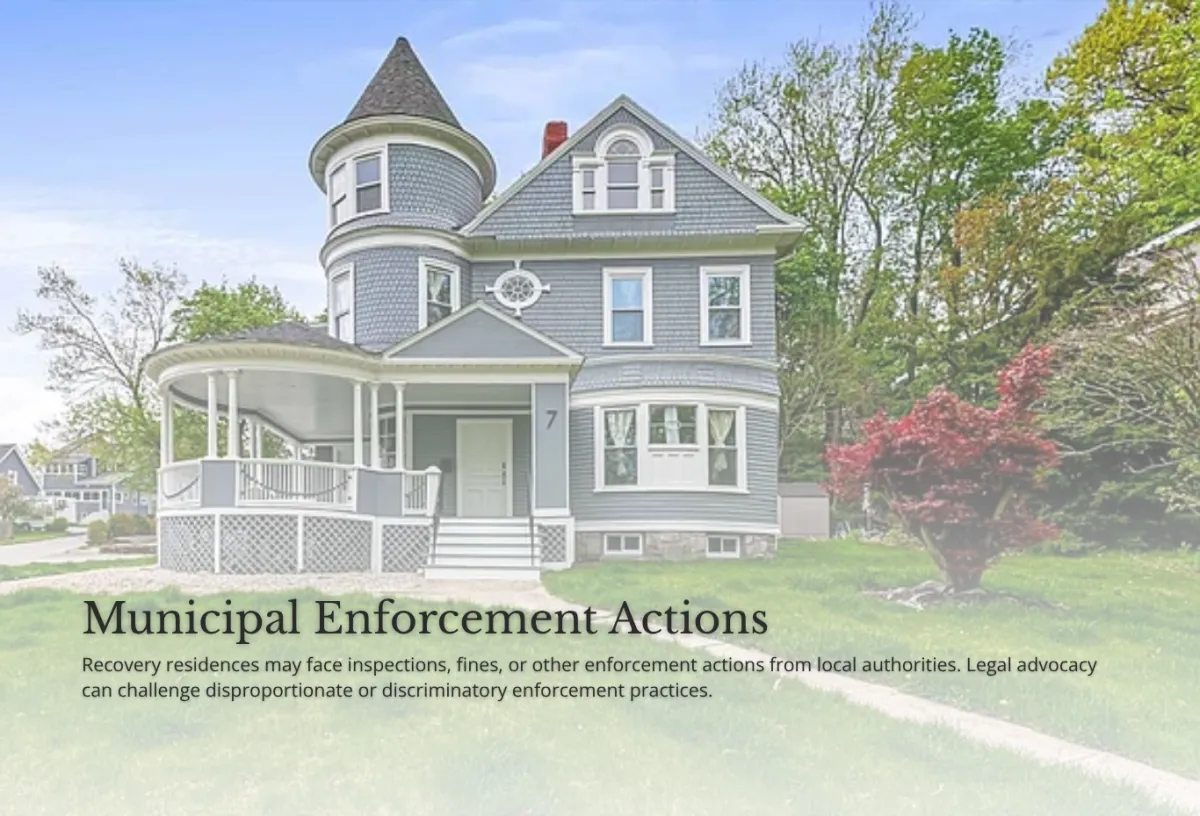
Zoning regulations and local enforcement actions can create significant barriers to establishing or maintaining recovery housing.
Attorney Roles
Legal work in this field often involves civil rights advocacy, housing law, and land-use issues, requiring a multidisciplinary approach.
Framework for Advocacy
Understanding the legal environment equips attorneys with the knowledge to effectively protect residents’ rights while also helping ensure the long-term sustainability.
Supportive Housing
Recovery residences provide structured, safe housing to help individuals maintain stability and rebuild their lives.
Legal Protections
Fair housing laws and disability rights are central to ensuring recovery residences can operate without discrimination.
Fair Housing and Civil Rights Protections
Understanding the legal protections that support recovery housing is essential for effective advocacy. This section highlights the most relevant laws and regulations that attorneys rely on when defending or establishing recovery residences.
What is the Fair Housing Act and how does it affect recovery housing?
The Fair Housing Act (FHA), as amended by the Fair Housing Amendments Act of 1988 (42 U.S.C. §§ 3601–3619), is the primary federal law governing discrimination in housing. It prohibits discrimination in the sale, rental, and use of housing based on protected characteristics, including disability. The Act is broadly interpreted to prohibit practices that “restrict the choices” of individuals with disabilities or that discourage them from living in certain communities. In the context of recovery housing, this means that municipalities, landlords, and neighbors cannot impose barriers that effectively exclude individuals in recovery from residential neighborhoods.
For recovery residences, the FHA has specific and powerful implications. Individuals in recovery from substance use disorders are generally protected as persons with disabilities, and recovery homes themselves—along with their operators—are protected from discriminatory treatment. The law also recognizes that groups of unrelated individuals with disabilities living together may function as the equivalent of a traditional family, and therefore must be treated similarly under zoning and occupancy rules. As a result, recovery housing cannot be singled out for additional restrictions, permitting requirements, or exclusionary zoning simply because of the population it serves.
Do disability protections apply to individuals in recovery?
Yes. Federal law, including the FHA, the Americans with Disabilities Act (ADA), and the Rehabilitation Act of 1973, recognizes individuals recovering from substance use disorders as persons with disabilities when their condition substantially limits one or more major life activities. This recognition reflects the medical and legal understanding of addiction as a chronic condition affecting brain function and daily life, rather than a matter of personal choice.
Importantly, these protections extend not only to individuals themselves but also to the housing providers and agents who serve them. Recovery housing operators, landlords, and even real estate agents working on behalf of individuals in recovery are protected from discrimination based on their association with a protected class. However, current illegal drug use is not protected under federal law, which creates an important legal distinction in how recovery housing must structure its policies and admissions practices.
How do federal civil rights laws impact recovery housing?
Federal civil rights laws—including the FHA, ADA, and related statutes—establish a legal framework that requires equal treatment in housing and prohibits both intentional discrimination and policies that have a discriminatory effect. This includes local zoning decisions, land-use policies, licensing requirements, and enforcement actions. Even facially neutral rules can violate federal law if they disproportionately impact individuals with disabilities or are applied in a discriminatory manner.
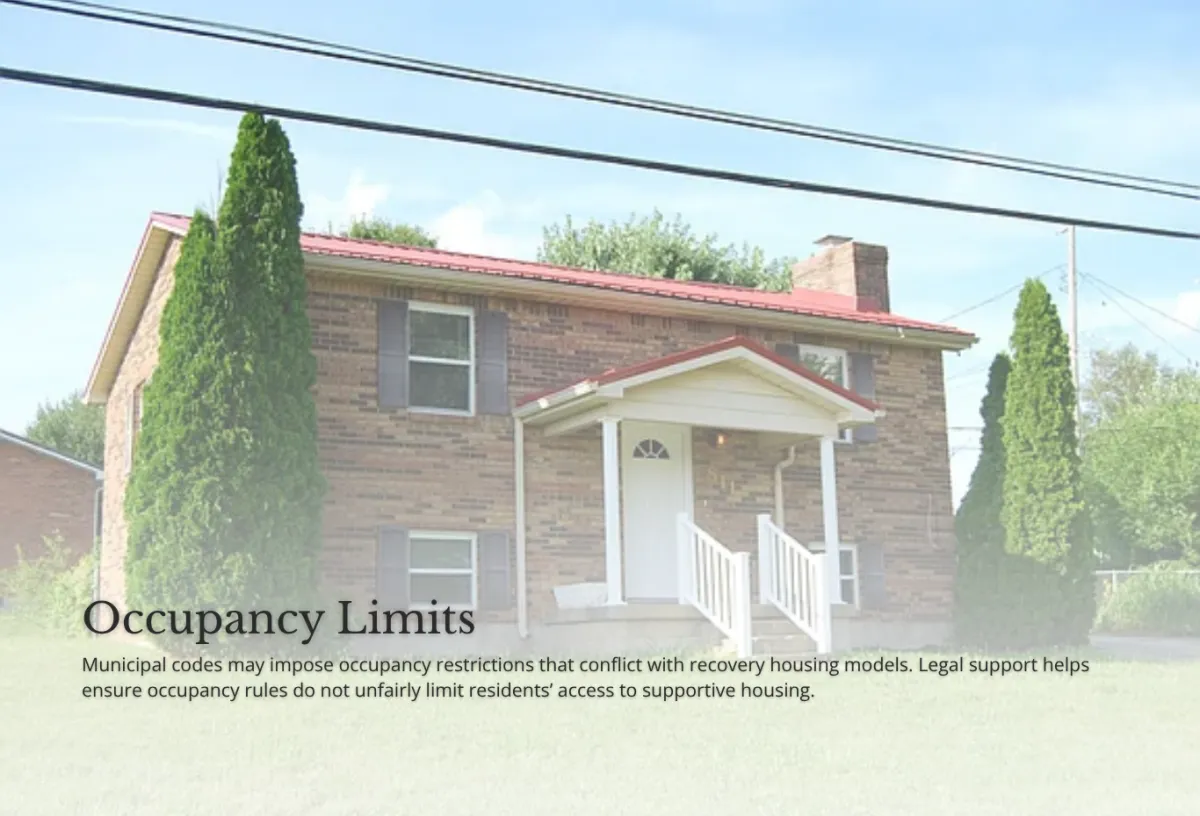
These laws also impose an affirmative obligation on municipalities to provide “reasonable accommodations” when necessary to ensure equal housing opportunity. This may include waiving or modifying zoning restrictions, reducing parking requirements, or allowing higher occupancy levels when justified by the needs of residents in recovery. Failure to provide such accommodations is itself a separate violation of the law, regardless of whether discriminatory intent is proven. In practice, this framework significantly limits the ability of local governments to restrict or exclude recovery housing.
Why do legal disputes in recovery housing often arise?
Legal disputes in recovery housing most commonly arise at the intersection of zoning law, fair housing protections, and community opposition. Municipalities may attempt to classify recovery homes as commercial uses, boarding houses, or treatment facilities, triggering additional restrictions that do not apply to other residential uses. Courts have repeatedly found that these classifications can be improper when the home functions as a residential “family-like” environment.
Disputes also frequently arise from discriminatory reactions once the intended use of a property is disclosed. For example, landlords may initially agree to lease a property but withdraw or impose new conditions upon learning that it will be used for recovery housing—conduct that has repeatedly formed the basis of successful discrimination claims. These conflicts often require legal intervention to clarify rights under federal law and to challenge practices rooted in stigma, misinformation, or risk aversion rather than lawful considerations.
How do attorneys use these legal frameworks in advocacy?
Attorneys play a central role in enforcing fair housing protections and advancing recovery housing access. They use federal statutes such as the FHA (42 U.S.C. § 3604 and § 3617), along with state analogues, to challenge discriminatory zoning laws, landlord refusals, and unequal enforcement practices. These cases may be brought in administrative agencies (such as HUD), state courts, or federal courts, depending on the severity and scope of the violation.
In addition to litigation, attorneys use these legal frameworks to educate municipalities, negotiate reasonable accommodations, and establish precedents that protect future housing developments. Many cases resolve through settlement, often including monetary damages, policy changes, and mandatory fair housing training for defendants. Through this work, legal advocacy not only remedies individual instances of discrimination but also helps shape a broader legal environment in which recovery housing can operate more freely and predictably.
Access the Legal Guide
Get the book that goes deeper on the legal issues facing recovery housing. Recovery Housing Law & Practice is an instant-download PDF focused on fair housing protections, zoning disputes, and legal remedies for sober house operators.
Legal Issues Affecting Recovery Residences
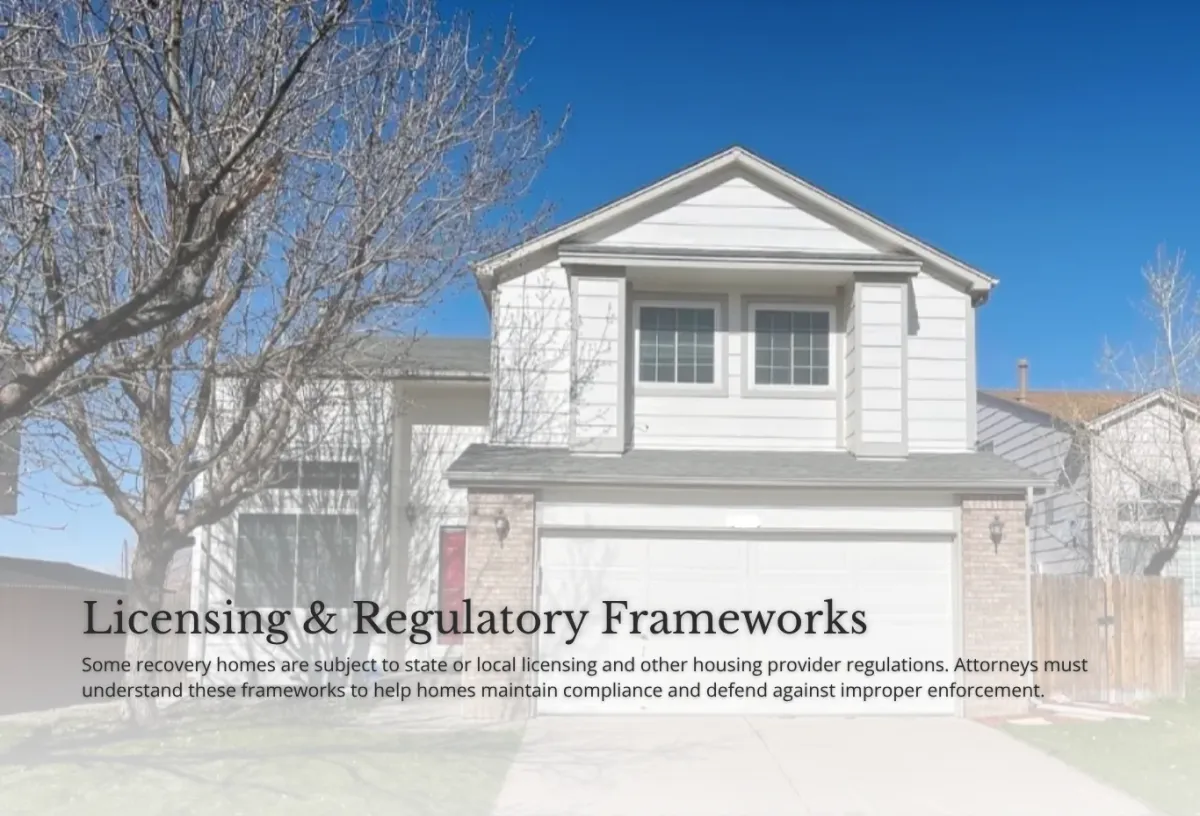
Recovery residences face unique legal challenges that attorneys must navigate to ensure residents’ rights are protected and homes operate lawfully.
Advancing Recovery Housing Through Collaboration
Recovery housing advocacy involves complex legal issues related to fair housing protections and civil rights law. The resources provided here are intended to support attorneys seeking to better understand this field and the legal challenges affecting recovery residences. Attorneys interested in contributing to advocacy efforts can participate through the Recovery Housing Advocacy Initiative.
Protecting fair housing and strengthening recovery housing nationwide.
© 2026 Recovery Housing Advocacy Initiative, Inc. All rights reserved.